
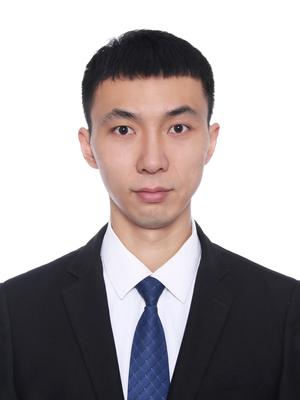
Shou Feng, Professor
Harbin Engineering University, China
Bio: Feng Shou, Professor, Ph.D Supervisor of Harbin Engineering University, Deputy Director of the Key Laboratory of Advanced Ship Communication and Information Technology of the Ministry of Industry and Information Technology, IEEE member, Senior member of the Chinese Society of Communications, Member of the Imaging Detection and Perception Committee of the Chinese Society of Image and Graphics, peer review expert of the National Natural Science Foundation of China, academic dissertation review expert of the Ministry of Education, Visiting Scholar of Indiana University Bloomington, Guest Editor of Remote Sensing, an international authoritative journal in the field of remote sensing. Member of the editorial board of international Journal Frontiers in Imaging, American Journal of Remote Sensing, He also serves as a reviewer for many authoritative academic journals such as IEEE TIP, IEEE TNNLS, IEEE TGRS, and etc. In the past three years, he has published 30 academic papers as the first/corresponding author in top journals in the field of Remote Sensing such as IEEE TIP, IEEE TNNLS, IEEE TGRS, and 7 papers have been selected as ESI highly cited papers.
Invited Speech Title: Modality-Adaptive Fractional-Domain Decoupling and Interaction Network for Multi-Source Remote Sensing Image Classification
Abstract: Jointly exploiting the rich spectral information of hyperspectral imagery (HSI) and the geometric and structural information of active sensors (LiDAR/SAR) has attracted increasing attention in the remote sensing classification community. To reduce dependence on large-scale annotations, recent methods incorporate the discrete wavelet transform (DWT) as a frequency domain prior to provide deterministic structural decomposition. However, DWT is confined to the fixed Fourier frequency axis, offering no flexibility to choose a more suitable analysis perspective for signals with different non-stationary characteristics across heterogeneous modalities. To address this issue, we propose a modality-adaptive fractional-domain decoupling and
interaction network (MAFrDNet), which introduces modality adaptive fractional-domain decoupling analysis into multi-source remote sensing classification. Experiments on two public datasets indicate that MAFrDNet achieves state-of-the-art classification performance with competitive efficiency.
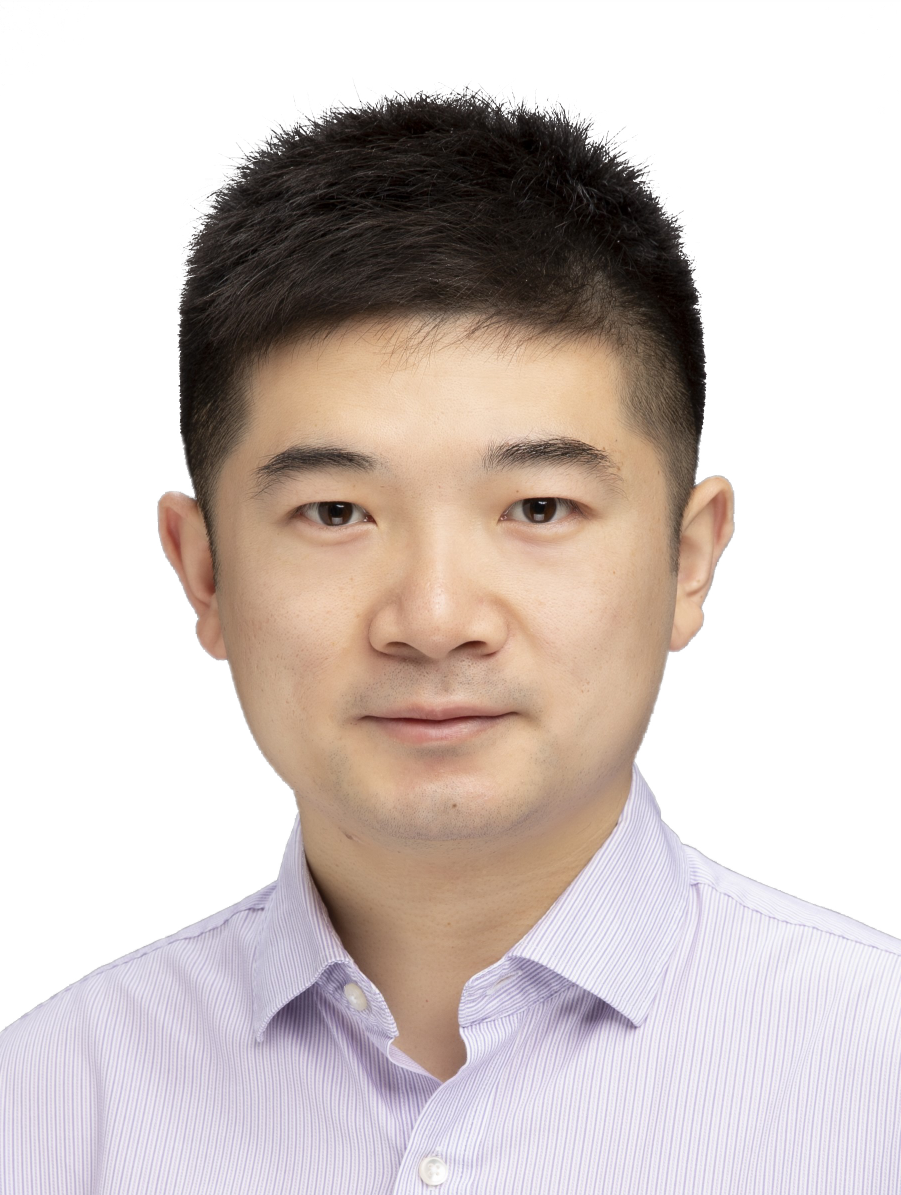
Lin Gao, Professor
University of Chinese Academy of Sciences, China
Bio: Gao Lin is a Professor and PhD Supervisor at the Institute of Computing Technology, Chinese Academy of Sciences (CAS), Deputy Director of the Ubiquitous Computing System Research Center, and a Professor at the University of Chinese Academy of Sciences. He earned his PhD from Tsinghua University. His research focuses on computer graphics and 3D computer vision. He has published over 100 papers in top venues including SIGGRAPH, TPAMI, and TVCG. His face AIGC application is used by users in more than 180 countries/regions worldwide. He currently/formerly serves as Secretary-General of the Asian Graphics Association and CSIG Intelligent Graphics Committee, Program Committee Member of SIGGRAPH, Area Chair of CVPR, and Associate Editor of IEEE TVCG. As PI, he leads projects including the National Key R&D Program and NSFC Excellent Young Scientist Fund. His awards include the Asian Graphics Young Scholar Award, Wu Wenjun AI Outstanding Young Award, and CCF First Prize for Technical Invention.
Invited Speech Title: TBA

Xiwen Zhang, Professor
Beijing Language and Culture University, China
Bio: Prof. Zhang worked as an associated professor from 2002 to 2007 at the Human-computer interaction Laboratory, Institute of Software, Chinese Academy of Sciences. From 2005 to 2006 he was a Post doctor advised by Prof. Michael R. Lyu in the Department of Computer Science and Engineering, the Chinese University of Hong Kong. From 2000 to 2002 he was a Post doctor advised by Prof. ShiJie Cai in the Computer Science and Technology department, Nanjing University. Prof. Zhang's research interests include pattern recognition, computer vision, and human-computer interaction, as well as their applications in digital image, video, and ink. Prof. Zhang has published over 60 refereed journal and conference papers. His SCI papers are published in Pattern Recognition, IEEE Transactions on Systems Man and Cybernetics B, Computer-Aided Design.
Invited Speech Title: TBA
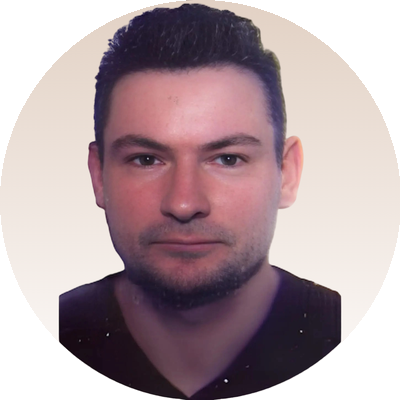
Philippe Durand
CNAM, France
Bio: Philippe Durand is a Senior Lecturer in the Department of Mathematics and Statistics at the Conservatoire National des Arts et Métiers (CNAM) in Paris, and a member of the Mathematical and Numerical Modelling Department (M2N). His research lies at the interface between mathematical engineering and theoretical mathematics. He has worked on the mathematization of gauge theories in physics and string theory, on tensor analysis applied to networks, and on the application of topological and statistical methods to image processing.
Invited Speech Title: Morphological Granulometry (VARAN) and Topological Extraction (Sentinel-1/2, Le Luc)
Abstract: This invited lecture presents a complete mathematical framework for extracting urban structures built-up areas, residential blocks, and transport networks from highly noisy radar imagery acquired over the city of Le Luc in south-eastern France. Radar images of semi-urban environments are difficult to interpret because of speckle noise, non-Gaussian backscatter distributions, and the multiple scattering mechanisms generated by buildings, roads, and heterogeneous land cover. Our objective is to recover a coherent representation of the urban fabric, comparable to the structures visible in the optical aerial image, while relying on radar data and mathematically robust processing tools. We develop an integrated approach combining three complementary paradigms. The first one is Mathematical Morphology, including Alternating Sequential Filters, granulometry, directional openings, and morphological skeletonization. The second one is Topological Data Analysis (TDA), based on persistent homology, H0–H1 generators, and Wasserstein distances. The third one is an approach inspired by statistical physics, based on binary Ising Markov random fields and simulated annealing, used as a spatially coherent decision model for urban versus non-urban segmentation. Morphology provides a multi-scale geometric description capable of reducing speckle and isolating coherent radar responses associated with buildings and road segments. TDA supplies complemen- tary global information on the organization of urban textures, revealing stable topological patterns loops, cavities, and block structures — that remain robust under noise and local fluctuations. The Ising model introduces an energy-based formulation in which the unary term is built from radar observables such as log-intensity, local contrast, gradient magnitude, and possibly anisotropy descriptors, while the pairwise term enforces spatial coherence between neighboring pixels. Simulated annealing is then used to minimize the corresponding non-convex energy and to avoid poor local minima, producing a regularized binary urban mask that is particularly well suited to noisy radar data. Applied to the Le Luc dataset, this combined methodology enables the recovery of major urban zones, including the historical nuclei VN1, VN2, and VN3, residential housing areas, dense collectivehousing blocks, and the main transport axes such as the highway, major roads, and railway lines. The morphological segmentation is supported by topological signatures, as urban regions exhibit a richer distribution of persistent H1 generators, whereas background areas are characterized by simpler connectivity profiles dominated by H0 components. The Ising-simulated annealing stage acts as a robust decision layer, transforming local radar descriptors into a spatially stable partition of the scene. This talk highlights the synergy between geometry, topology, and statistical physics for radar image analysis. It shows that the combination of morphological filtering, topological persistence and Ising-type regularization yields an interpretable, noise-tolerant, and mathematically structured pipeline for urban extraction under severe speckle conditions. Perspectives include extensions to multi-temporal radar sequences, polarimetric acquisitions, and integration into near-real-time environmental monitoring systems.
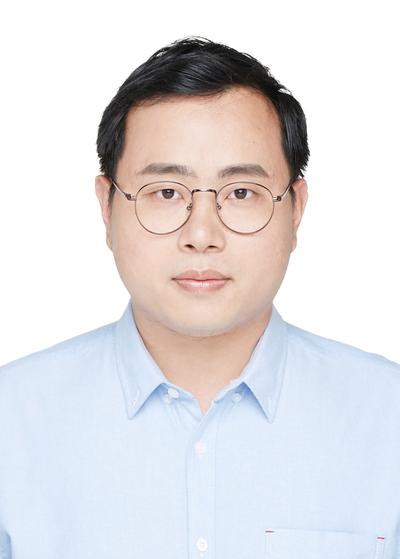
Jie Guo, Associate Professor
Nanjing University, China
Bio: Dr. Jie Guo is an associate professor (with tenure) in the School of Computer Science at Nanjing University. He received his PhD from Nanjing University in 2013. His current research interest is mainly in computer graphics, virtual reality and 3D vision. He has over 100 publications in internationally leading conferences (SIGGRAPH, SIGGRAPH Asia, CVPR, ICCV, ECCV, IEEE VR, etc.) and journals (ACM ToG, IEEE TVCG, IEEE TIP, etc.).
Invited Speech Title: TBA

Shuaifeng Zhi, Associate Professor
National University of Defense Technology (NUDT), China
Bio: Shuaifeng Zhi currently an Associate Professor at the Department of Electronic Science and Technology, National University of Defense Technology (NUDT), China. He received the PhD degree in computing research from the Dyson Robotics Laboratory, Imperial College London in 2021, supervised by Prof. Andrew J. Davison. His current research interests focus on 3D vision, particularly on multi-modal scene understanding and scene representation learning. He is selected for the 10th Youth Elite Scientists Sponsorship Program by CAST and the grantee of HNNSF for the Excellent Young Scientists Fund. He has published over 20 papers in prestigious international journals and conferences including T-PAMI, CUSR, T-GRS, ICCV(Oral), etc. His Google Scholar citations exceed 1,800, with the highest-cited single first-author paper reaching 700+ citations. He serves as an Editorial Board member of The Visual Computer and has regularly served as a reviewer for leading academic venues.
Invited Speech Title: TBA
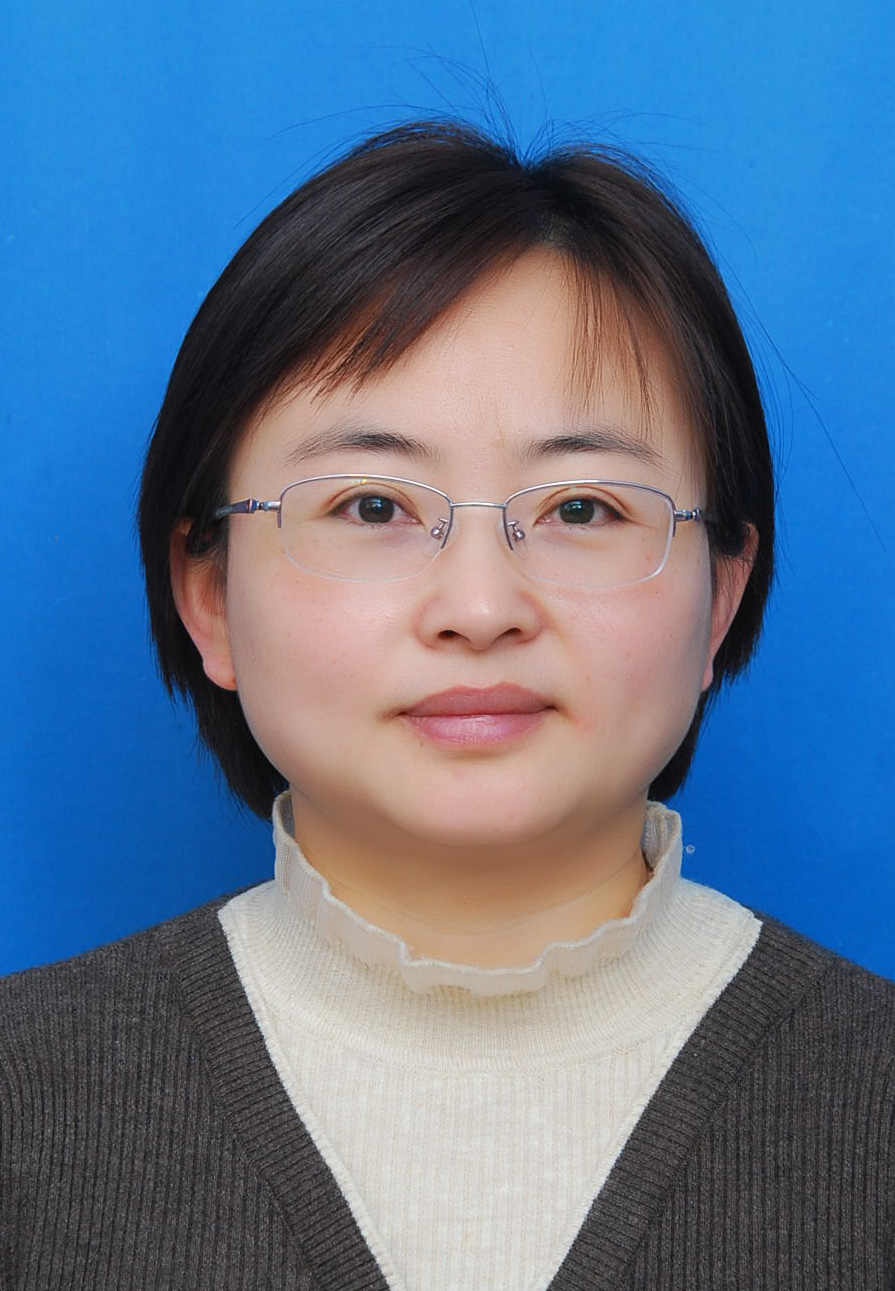
Ye Yu, Associate Professor
Hefei University of Technology, China
Bio: Ye Yu received her Ph.D. in Computer Science and Technology from Hefei University of Technology (HFUT). She is currently an Associate Professor and PhD Supervisor at the School of Computer Science and Information Engineering, HFUT. She was a Visiting Scholar at the University of North Texas (2008-2009) and the University at Buffalo, SUNY (2017-2018). She is a senior member of IEEE, a member of the China Computer Federation (CCF) and the China Society of Image and Graphics (CSIG). Her research team has won first prize in the Anhui Provincial Transportation Science and Technology Progress Award.
Invited Speech Title: TBA
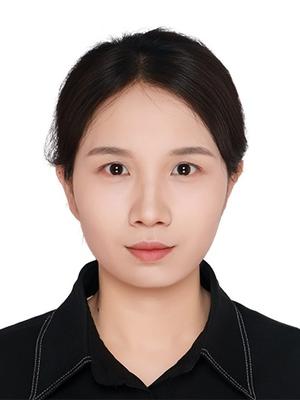
Jing Hu, Associate Professor
Xi'an University of Technology, China
Bio: Jing Hu received the B.S. degree from Nanchang University, Jiangxi, China, in 2013, the Ph.D. degree from Xidian University, Shaanxi, China, in 2018. She is currently working as an Associate Professor with the School of Computer Science and Engineering, Xi'an University of Technology, China. She is the author or coauthor of more than 20 publications on image processing, including international journal papers, conference papers, and book chapters. She has also been a reviewer of several journals, such as IEEE TPAMI, TIP, TCSVT, TGRS. Her research interests include remote sensing image processing, deep learning and pattern recognition.
Invited Speech Title: TBA
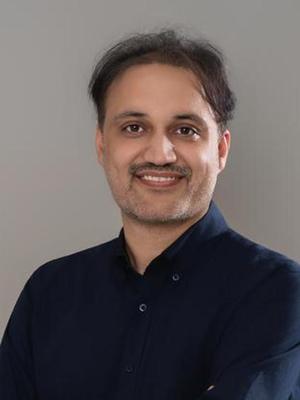
Ahmad Ali, Doctor Lecturer
Hainan Bielefeld University of Applied Sciences, China
Bio: Dr. Ahmad Ali received his Ph.D. from Shanghai Jiao Tong University, China, and subsequently completed his postdoctoral research at Shenzhen University, China. He is currently working as a Doctor Lecturer at Hainan Bielefeld University of Applied Sciences, China. His research interests include artificial intelligence, machine learning, deep learning, intelligent transportation systems, spatio-temporal data analytics, and multimodal learning. Dr. Ali has published high-quality research articles in well-recognized international journals, including Neural Networks, Information Sciences, Computer Science Review, Future Generation Computer Systems, IEEE Transactions on Intelligent Transportation Systems, and IEEE Transactions on Consumer Electronics. He has also contributed to reputable CCF-ranked international conferences, including ICPADS and the ACM/IEEE International Conference on Embedded Systems. His current research focuses on developing intelligent, data-driven, and multimodal learning approaches for smart transportation and urban computing applications.
Invited Speech Title: Attention-Driven Dynamic Spatio-Temporal Graph Learning for Multimodal Urban Traffic Flow Prediction
Abstract: Accurate prediction of urban traffic flow is essential for intelligent transportation systems (ITS) and effective smart city management. However, traffic dynamics are strongly influenced by multiple temporal patterns and external conditions, making it challenging for conventional models to fully capture complex spatio-temporal dependencies. To address these challenges, we propose an Attention-Driven Dynamic Spatio-Temporal Graph Network (Att-DSTGNet) that integrates multimodal information and adaptive attention mechanisms for large-scale traffic forecasting. The proposed framework jointly models four key factors shaping traffic evolution: recent patterns, daily patterns, weekly patterns, and external influences such as weather and events. Att-DSTGNet employs a multi-scale dynamic graph convolutional network to represent evolving spatial dependencies among road segments, while a temporal attention encoder selectively captures fine-grained temporal correlations within and across these factors. To incorporate multimodal context, a Vision Transformer-based module extracts high-level meteorological features, which are adaptively fused with traffic representations through a cross-modal attention mechanism. Extensive experiments on large-scale real-world datasets demonstrate that Att-DSTGNet consistently outperforms state-of-the-art baselines in multi-horizon traffic prediction tasks.